
Last updated November 14, 2026
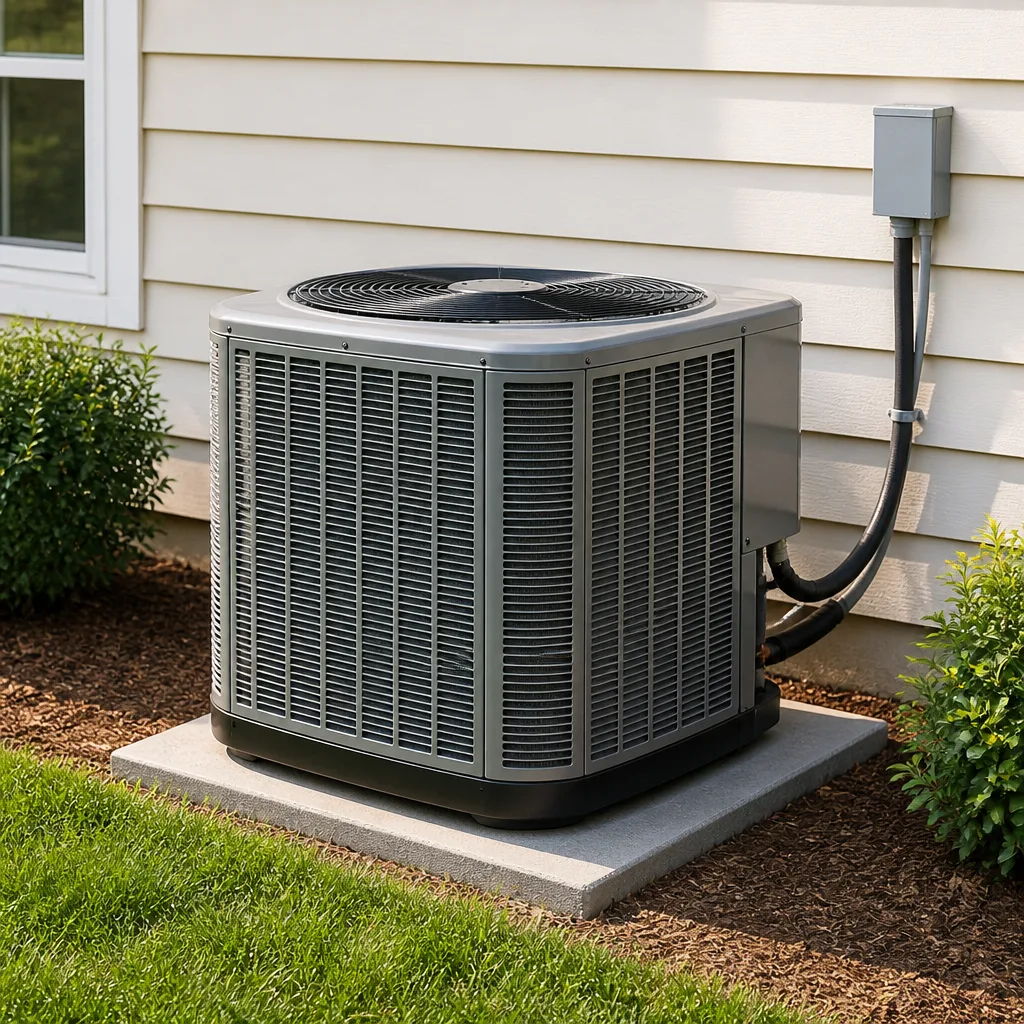 AC repair
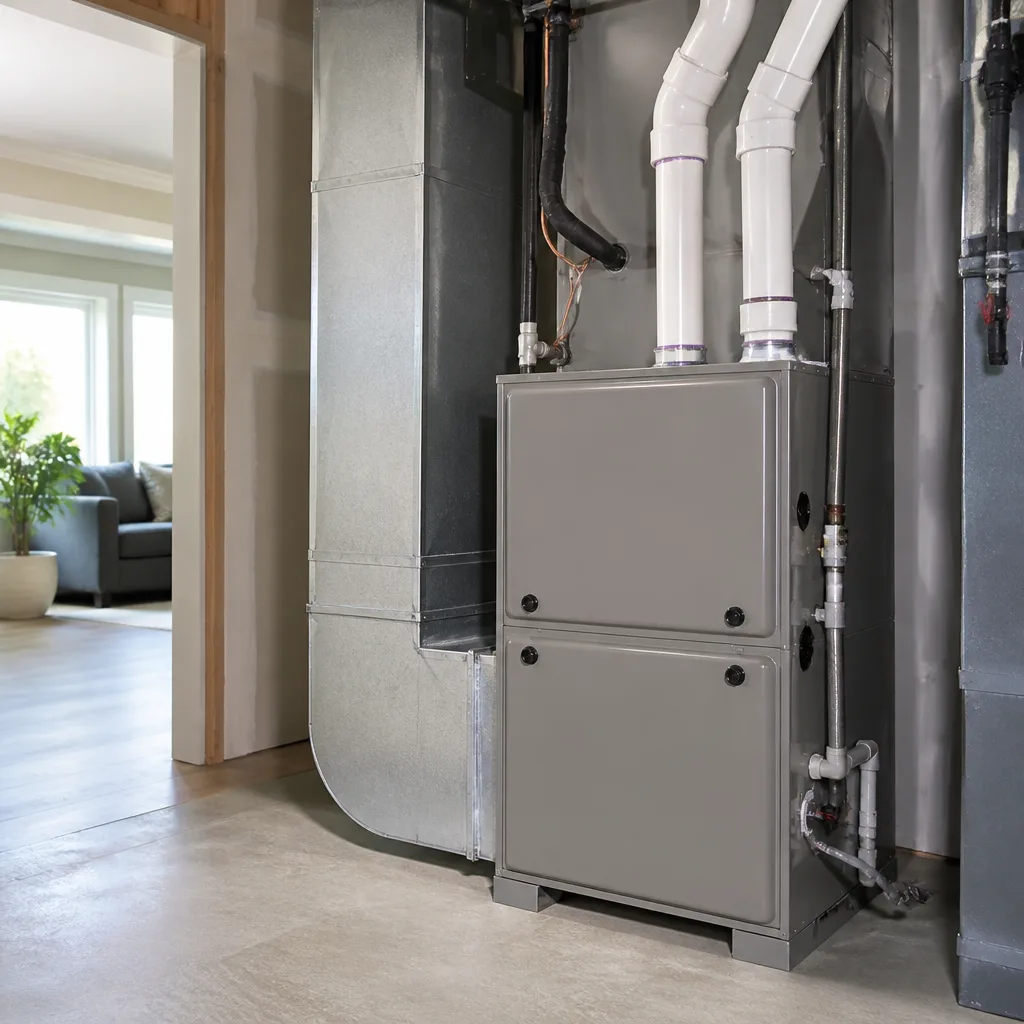 Furnace & heating
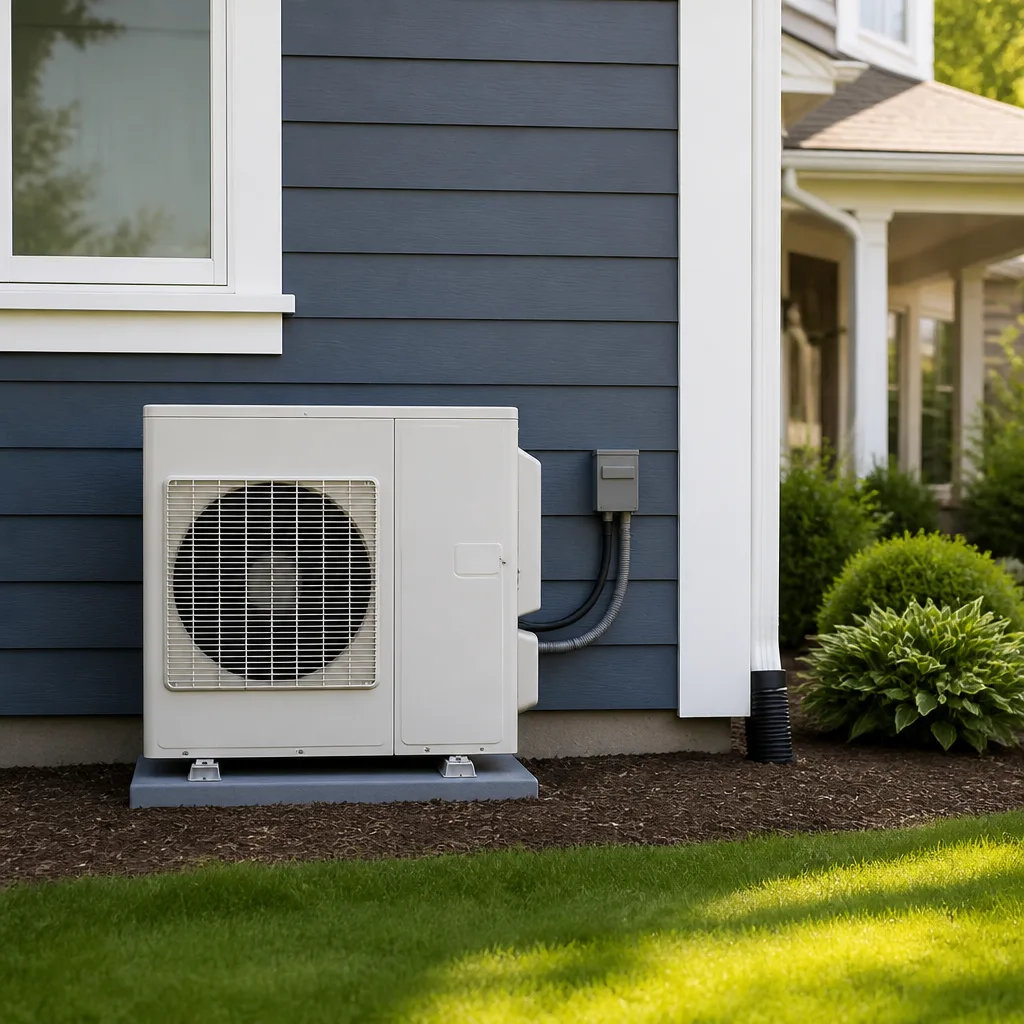 Heat pumps
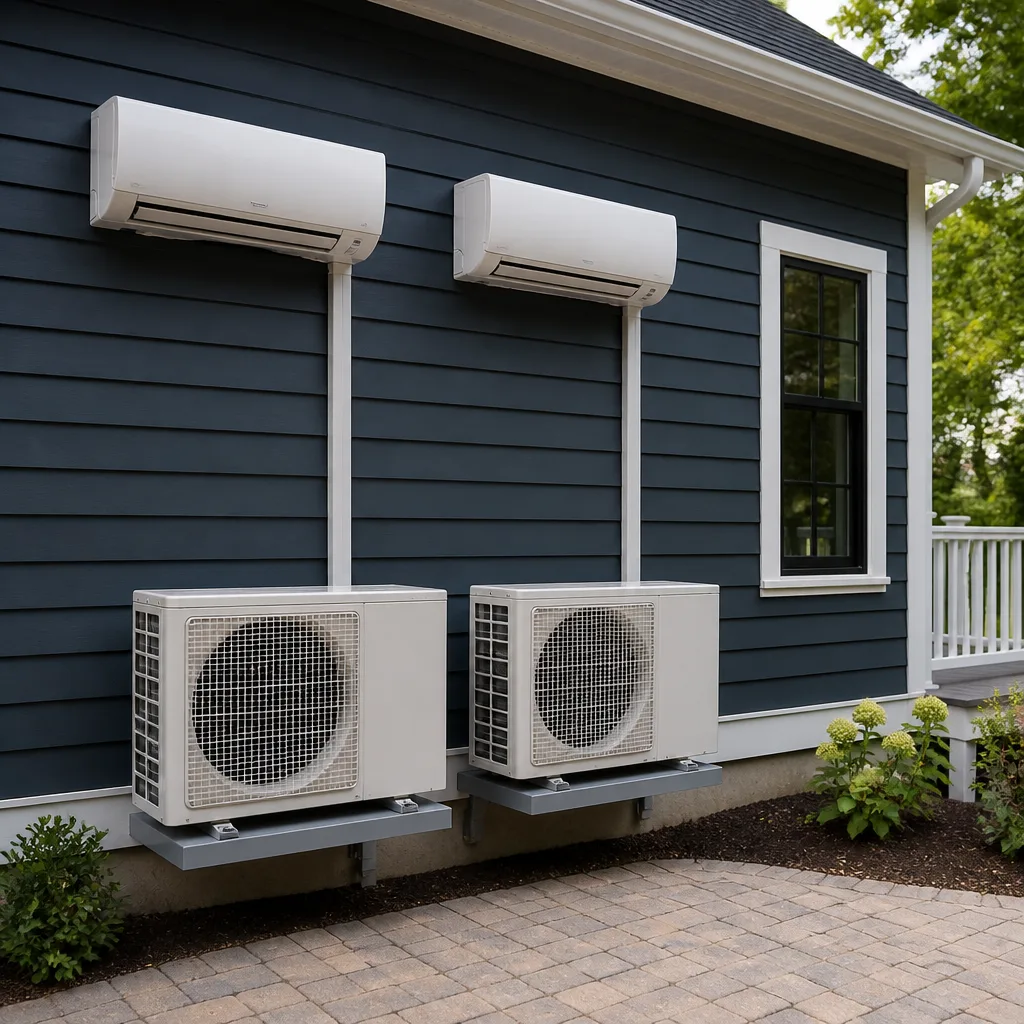 Ductless mini splits
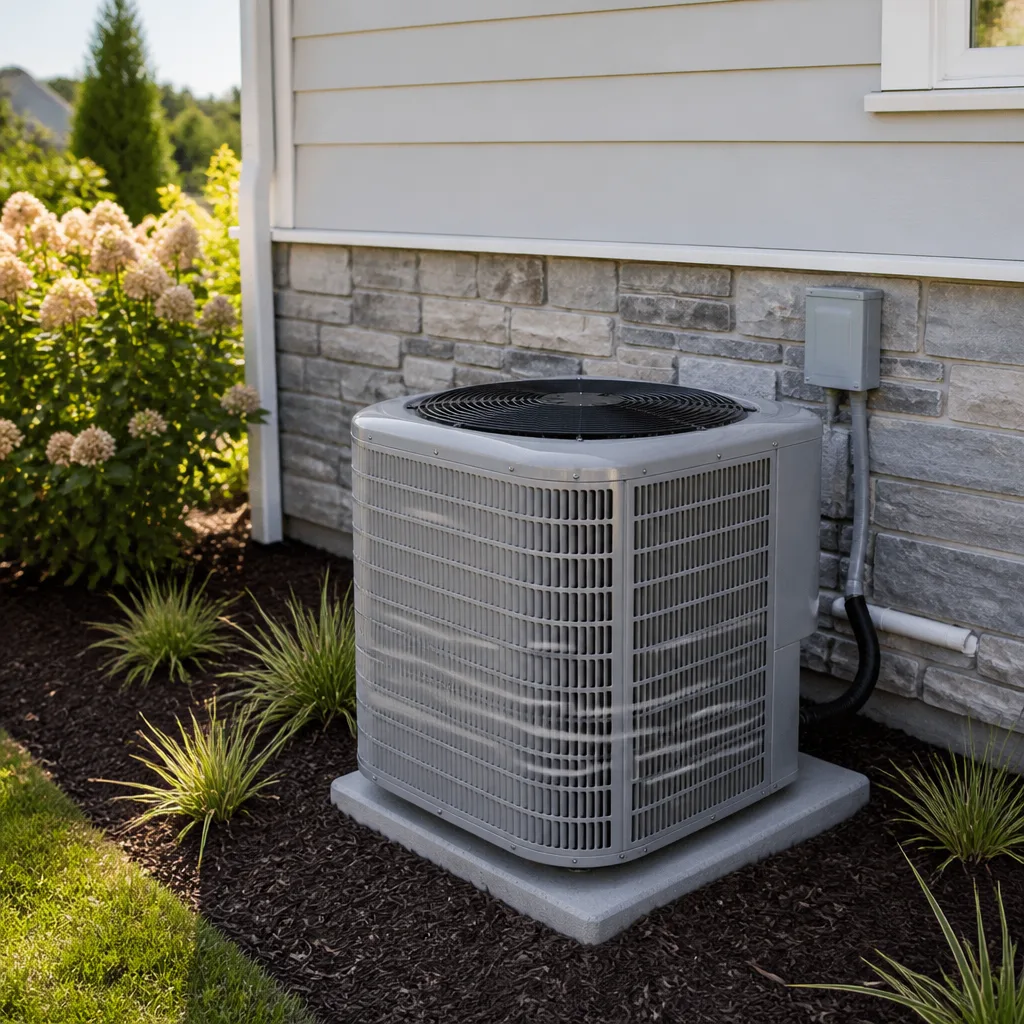 Carrier
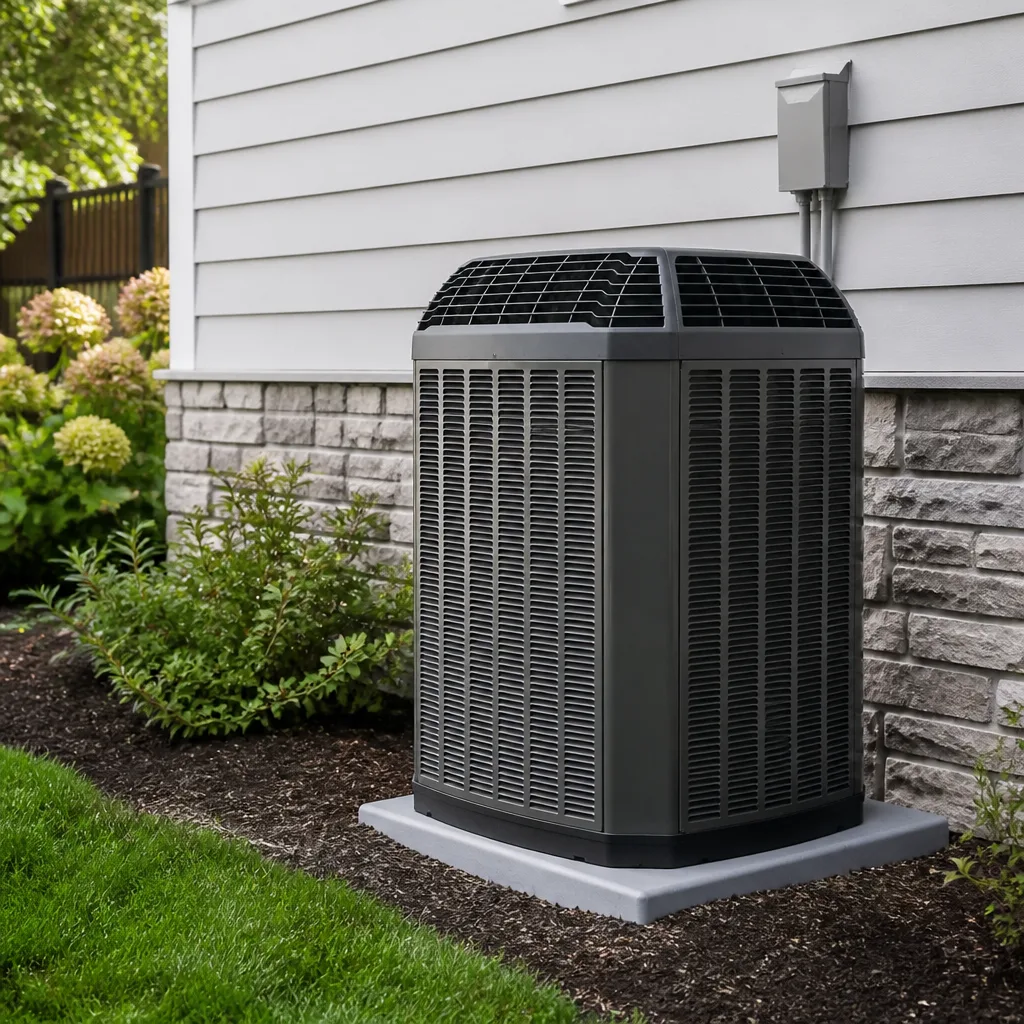 Trane
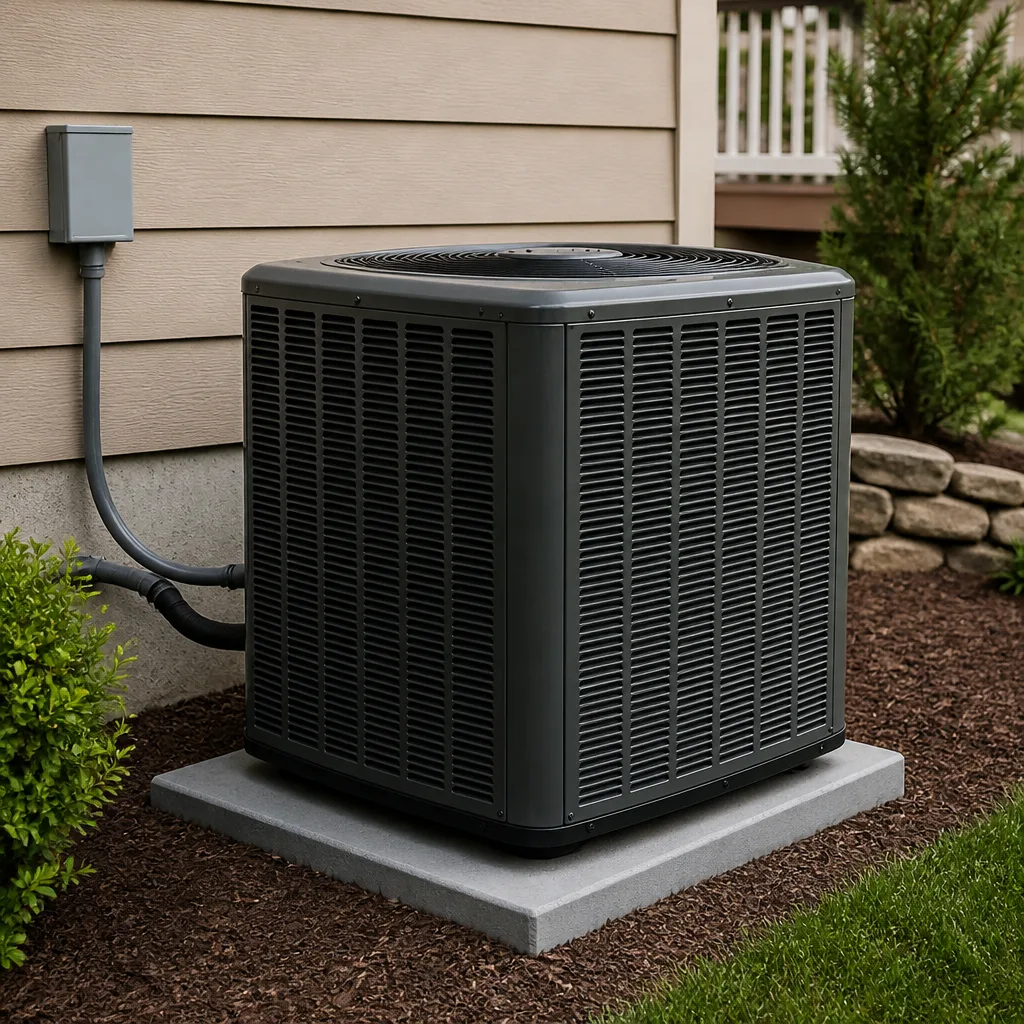 Goodman
Seasonal tune-up and full diagnostic on your Carrier, Trane, or Goodman system - readings shown to you before any repair is proposed
Diagnosis first, numbers second - you approve the repair price before a single part goes in.
Get your free estimateThe Complete AC Repair Guide for Downey Homeowners
Most AC repair advice floating around the internet is written for nobody in particular. It treats a home in Downey the same as a home in Seattle, and it treats a Carrier condenser the same as a Goodman. That’s a problem, because the equipment in your backyard and the air moving over it are both specific. Downey summers regularly push past 95°F, and the humidity swings between muggy monsoon pushes and dry Santa Ana wind days. That combination wears on an air conditioner in ways generic advice never mentions. This guide covers what actually fails in Downey, how to read your own system before you call anyone, and how to know whether a repair is the right call or replacement math finally pencils out.
Quick Answer
AC repair in Downey almost always comes down to one of five things: a failed capacitor, a refrigerant leak, a frozen evaporator coil, a clogged condensate drain, or a failing compressor. A technician who knows your specific brand can usually diagnose which one on the first visit, and the written estimate you receive sets the final price. If your system is blowing warm air during a heat wave, turn it off and call before the compressor takes damage from running with low refrigerant.
Styles & brands we work with
- AC repair
- Furnace & heating
- Heat pumps
- Ductless mini splits
- Carrier
- Trane
- Goodman
Table of Contents
- Why Downey’s Microclimate Punishes Your AC
- How to Read Your System Before You Call
- What Brand-Specific Repair Actually Looks Like
- Using Your SCE Energy Bill as a Diagnostic Tool
- Refrigerant Recharge vs. Leak Repair: The Difference That Matters
- Repair or Replace? Running the Math for a Downey Home
- What to Expect on a First Repair Visit
- Common Mistakes to Avoid
- When to Call a Professional
Why Downey’s Microclimate Punishes Your AC
Downey sits in an inland-influenced coastal corridor. That means the marine layer from the coast doesn’t fully reach you, so summer afternoons bake into the mid-90s and beyond while the morning air can still feel damp. Your air conditioner lives in that swing. It runs hard through a long cooling season, then gets asked to handle humidity spikes that push it past its comfort zone.
That pattern creates a distinct set of failure points:
- Evaporator coil freeze-ups. When humidity climbs, the coil collects more condensation. If airflow is restricted by a dirty filter or a failing blower, that moisture freezes into a block of ice and the system stops cooling entirely.
- Capacitor degradation. Sustained high ambient temperatures in a Downey backyard speed up the chemical breakdown inside a run capacitor. A weak capacitor is one of the most common reasons a condenser hums but the fan never spins.
- Condensate drain clogs. High humidity means more water pulled out of the air, which means more water draining out. Algae and debris build up in the drain line faster here than in a dry climate, and a clogged drain can trip the float switch and shut the system down.
- Compressor strain. A long cooling season on a system that’s already low on charge is the fastest route to a dead compressor. That’s the one failure that turns a repair into a replacement decision.
None of that is bad luck. It’s predictable. If you know how Downey’s heat and humidity load your equipment, you know where to look when it stops cooling. That’s the difference between a technician who diagnoses the actual cause and one who just adds refrigerant and moves on to the next call.
How to Read Your System Before You Call
You don’t need gauges to narrow down a problem, but a few careful observations make the first visit faster and often cheaper. Here’s a short checklist to run before you pick up the phone:
- Check the air at a supply vent. Hold your hand to a register. If it’s room temperature or warm, the system isn’t cooling at all. If it’s cool but weak, you likely have an airflow problem.
- Look at the outdoor unit. Is the fan spinning? Can you hear the compressor humming? A fan that won’t spin usually points to a capacitor. A unit that’s completely silent may have lost power or tripped a breaker.
- Inspect the filter. Pull it out and hold it up to the light. A filter that’s gray and clogged starves the system of air and can freeze the coil. This is the single most common cause of “my AC stopped working” that isn’t a real repair at all.
- Look for ice on the indoor coil or refrigerant line. Frost or ice on either one means the system is low on refrigerant or has an airflow restriction. Turn it off and let it thaw before anyone touches it.
- Check the drain pan and line. Water pooling near the air handler or a drain line dripping where it shouldn’t points to a clog or a backed-up pan.
- Listen on startup. A clicking, clunking or grinding noise is mechanical. Rattling is usually a loose panel. Be ready to describe what you hear.
Write down what you find. When you call, telling us “the fan isn’t spinning and I hear a hum” versus “it’s running fine but the air is warm” gives us a genuine head start. For free help narrowing it down, our AC repair team can walk through it with you over the phone.
What Brand-Specific Repair Actually Looks Like
Air conditioners follow the same basic refrigeration cycle, but the parts, control boards, diagnostic protocols, and known weak points vary a lot between manufacturers. A technician who shows up familiar with your brand spends less time guessing and more time fixing.
We’re certified to diagnose and service nine of the most widely installed residential HVAC brands, and we work on the system you already have rather than steering you toward a specific manufacturer. Here’s what that looks like in practice:
- Carrier systems. Carrier’s control boards and communicating thermostats have specific fault-code sequences. A technician who knows those codes can often pinpoint a failed board or sensor without pulling the whole unit apart. Carrier condensers also tend to run on specific capacitor ratings that need an exact match.
- Trane systems. Trane equipment is built solid, but their newer communicating systems want a Trane-aware technician for diagnostics. When a Trane isn’t cooling, we check the variable-speed blower settings alongside the refrigerant charge – the two interact in ways that trip up a generalist.
- Lennox systems. Lennox units sometimes use unique refrigerant charge configurations and coil designs. If you’ve been told your Lennox “just needs freon” every year, that’s a red flag for an actual leak that deserves a leak search, not a top-off.
- Goodman systems. Goodman is common in Downey-area homes and relatively straightforward to service when you know the components. Their condenser fan motors and contactors are frequent replacement items, and knowing the right part the first time matters.
Whether your home runs a Trane or a Goodman, the goal is the same. Fix the actual problem, replace the failed part with the correct one, and don’t talk you into equipment you don’t need. One call covers your AC and your furnace, so we can diagnose the full split system in a single visit rather than sending you to a second contractor. If you’re deciding between getting the current system fixed and AC installation of a new one, we’ll tell you which makes sense.
Using Your SCE Energy Bill as a Diagnostic Tool
Your Southern California Edison bill is one of the most useful diagnostics you already have. Before you call anyone, pull out the last few months and look at the pattern. A cooling system that’s quietly failing shows up in consumption long before it shows up as a breakdown.
Here’s how to read it:
- A sudden spike in summer usage. If your kilowatt-hours jumped compared to the same month last year and nothing about your habits changed, the system is working harder to produce the same result. That often means a refrigerant issue or a failing compressor.
- A slow climb over several summers. A system losing efficiency gradually is usually dirty, low on charge, or aging. The climb tells you it’s time for a real tune-up and diagnostic rather than waiting for a breakdown.
- Usage that doesn’t drop when the weather cools. If your system runs a lot even on milder Downey days, its thermostat, sensors, or control board may be misbehaving.
- High usage with poor cooling. That combination is the classic signature of a system straining to hit a setpoint it can’t reach. It’s an airflow or charge problem more often than a “the house is hot today” problem.
Pair your bill with your thermostat history if you have a smart thermostat. The run times tell a technician a lot. So does the pattern of which rooms stay warm. A house that cools unevenly points to ductwork or balancing issues that a simple repair won’t fix. Knowing the difference before the visit saves everyone time.
Refrigerant Recharge vs. Leak Repair: The Difference That Matters
We answer 24/7, and one of the most common calls we take is some version of “my AC needs freon again.” That phrase is a warning sign, not a diagnosis. Refrigerant doesn’t get used up the way gas in a car does. A sealed system holds its charge indefinitely. If it’s low, it’s leaking, and adding refrigerant without finding the leak is a temporary fix at best.
The two approaches are not equal:
- A recharge alone tops off the system so it cools again. It makes the symptom go away. The leak is still there, so the charge slowly drops again and you’re back on the phone next season. Band-Aid, not repair.
- A leak search and repair finds the actual point where the charge is escaping, fixes it, then recharges to the correct level. It costs more up front because it involves the time and equipment to locate the leak. It’s the only option that actually solves the problem.
Why do Downey homeowners get sold the wrong one? Because a recharge is fast, cheap to quote, and gets the customer off the phone happy for a season. It’s also the wrong call more often than not.
If a technician quotes you a recharge without offering to find the leak, ask why. A good answer is “we did a leak search and found the source.” A bad answer is “this should hold for the season.” Ours is the first kind. We find the leak, fix it, and recharge to the manufacturer’s spec. If the leak is in a coil that’s not economically repairable, we’ll tell you that straight and lay out the options.
Repair or Replace? Running the Math for a Downey Home
Here’s the question nobody answers honestly at the kitchen table: is this repair the last one, or just the next one? Most homeowners have been burned by the “you need a whole new system” pitch when a $400 part would have solved it, and they’ve also been burned by pouring money into a system that was never going to make another summer.
The right way to think about it, in our experience, is to weigh four things together:
- The age of the equipment. Residential AC systems generally have a service life of roughly 10 to 15 years with regular maintenance. If yours is past that and has had multiple major repairs, replacement math starts to look better.
- The cost of the repair versus replacement. A single repair that’s a small fraction of new-system cost is usually obvious. A repair that eats a big chunk of replacement cost on an old system is a different conversation.
- Repair frequency. One repair in a season is normal. Three in one summer is a system telling you something.
- Efficiency gap. An aging system working hard in Downey heat burns more electricity than a modern high-efficiency unit. If your SCE bills have been climbing and the equipment is old, the gap is real and worth factoring in.
None of that is a formula, and anyone who hands you a neat equation is selling something. The honest answer is a judgment call made with the actual equipment in front of you. Repair or replace – we’ll tell you which one actually makes sense for your system. If replacement wins, we’ll give you a written fixed price and a set install date. No surprises, no same-day pressure. Replacement is load-calculated and scheduled, not scrambled together. If you’re in a Downey neighborhood like Rio San Gabriel or Wilderness Park and want a straight read on what you’re facing, that’s a conversation, not a sales call.
What to Expect on a First Repair Visit
A first repair visit should follow a predictable sequence. If a company skips steps, the diagnosis is often a guess. Here’s how a proper visit should go:
- You describe the symptoms. “It’s warm,” “it stopped yesterday,” “the fan won’t spin” – all useful starting points. Tell us what changed and when.
- We check the easy things first. Filter, thermostat settings, breaker, and drain pan. Half the calls we take turn out to be one of these rather than a failed part.
- We test electrical components. Capacitors, contactors, and control boards are tested with a meter. A bad capacitor is often a simple swap; a bad board is a different story.
- We check refrigerant pressures. This is where a leak diagnosis begins. Pressures that read low point to refrigerant; pressures that read off in other ways point to other issues.
- We inspect the indoor coil and airflow. Dirty coil, clogged drain, restricted return – all get checked before we move to the outdoor unit.
- We write it up. You get a written estimate before any work begins. The estimate sets the price. No mystery charges.
That’s the visit. Estimates are free, the diagnosis is honest, and the technician arrives familiar with your brand. If it’s a repair day and you call early enough, fast dispatch from 7am to 7pm usually means same-day service. If the call comes in outside dispatch hours, we book it into the next opening. Same-day repair is realistic for most Downey calls on the day you reach us.
Common Mistakes to Avoid
- Topping off refrigerant without a leak search. This is the single most common mistake we see in Downey homes, and it hands you a repeat bill every summer instead of a fixed system.
- Running the system with a frozen coil. If you see ice on the indoor unit or refrigerant line, shut it down. Running it frozen can send liquid refrigerant back to the compressor and turn a cheap repair into a major one.
- Ignoring a clogged drain line. The humidity in Downey fills drain pans faster than homeowners expect. A slow drain can overflow into ceilings and walls before you notice, so inspect yours before the peak of summer.
- Skipping the filter change. A clogged filter is the most common cause of frozen coils and weak airflow. It’s also the cheapest problem to fix – check it monthly through the cooling season.
- Hiring a generalist handyman to “take a look.” HVAC work involves refrigerant handling, electrical controls, and refrigerant-cycle diagnosis. A handyman splitting attention across plumbing and carpentry doesn’t have the equipment to actually fix a refrigerant leak.
- Accepting an AC replacement quote without a load calculation. A properly sized system depends on your home’s square footage, insulation, window orientation, and ductwork. A quote based on “we always install this size here” is a guess.
- Waiting until Labor Day to call. Downey’s cooling season peaks in mid-summer, and a system that’s been limping along all June is more likely to fail hard in August. Book the diagnostic while it’s still working rather than after.
See the difference
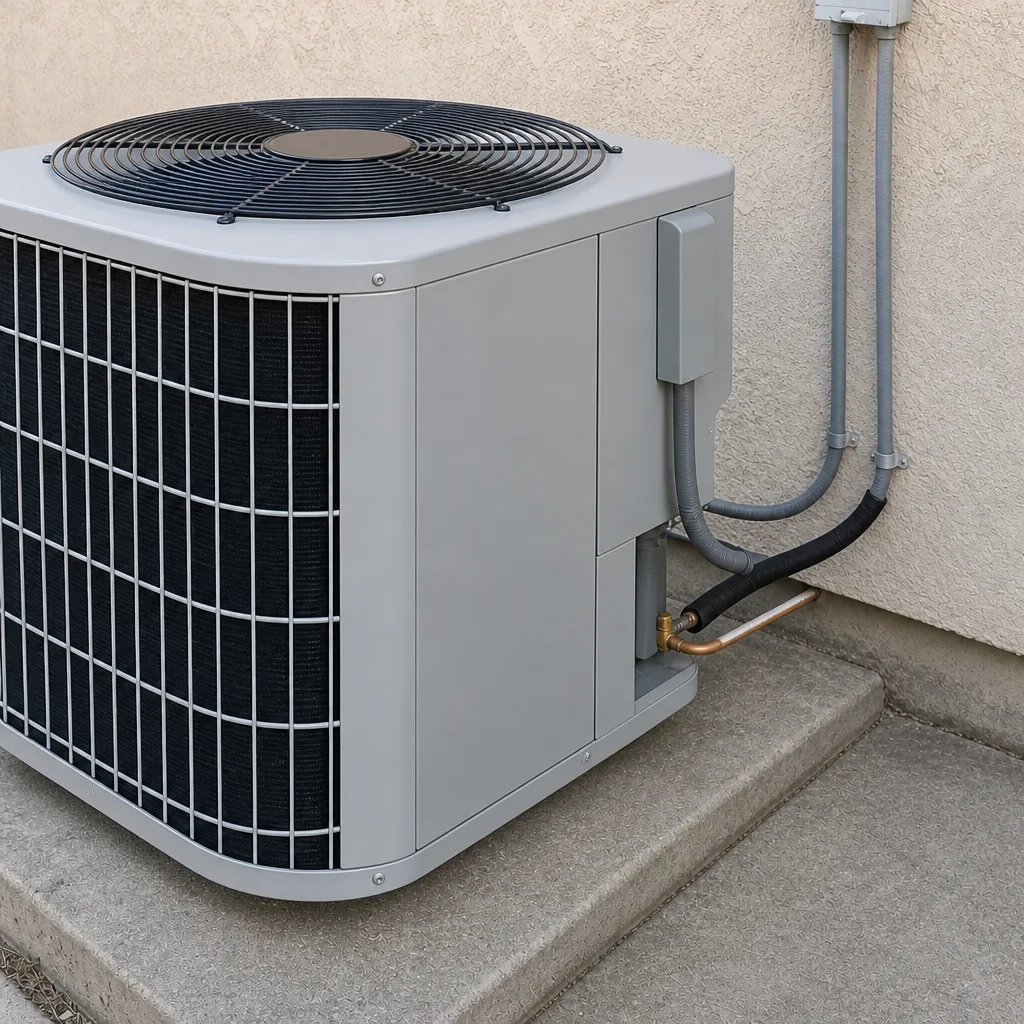
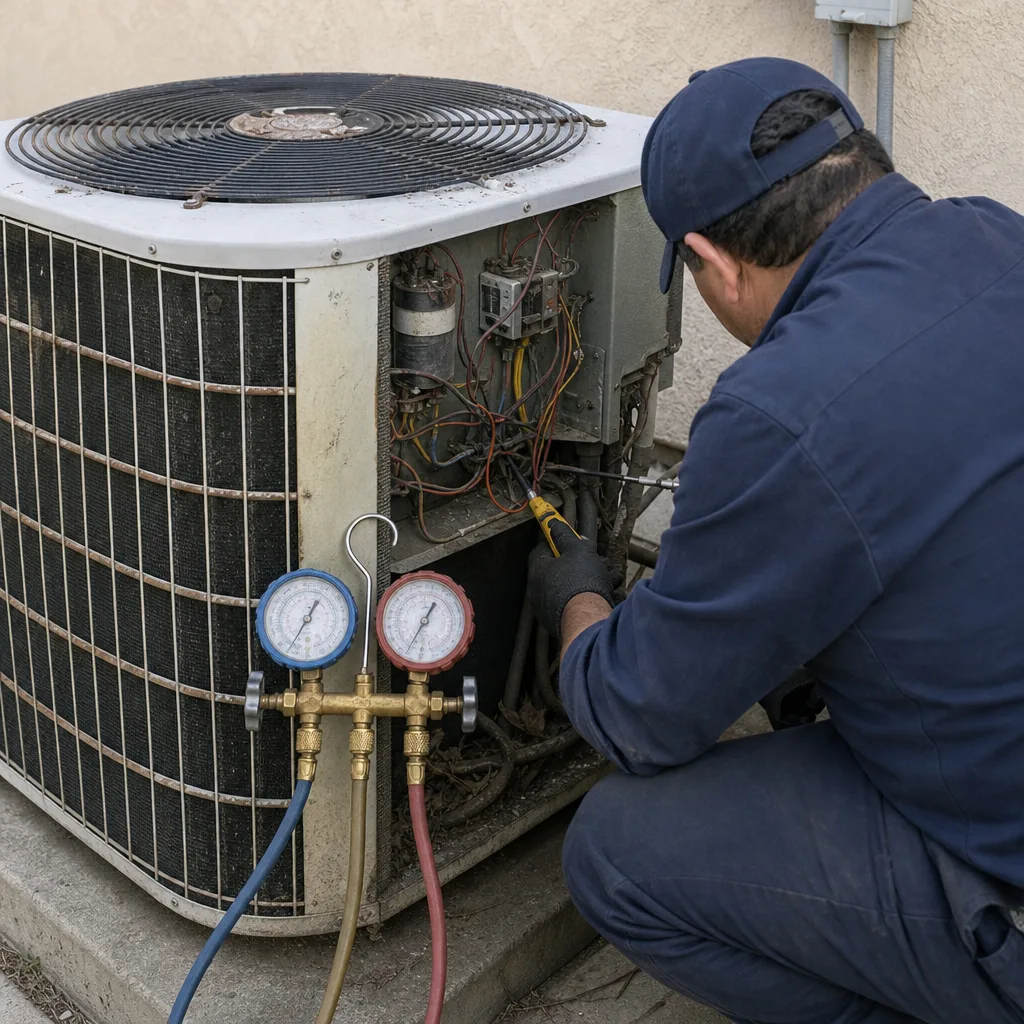 Before
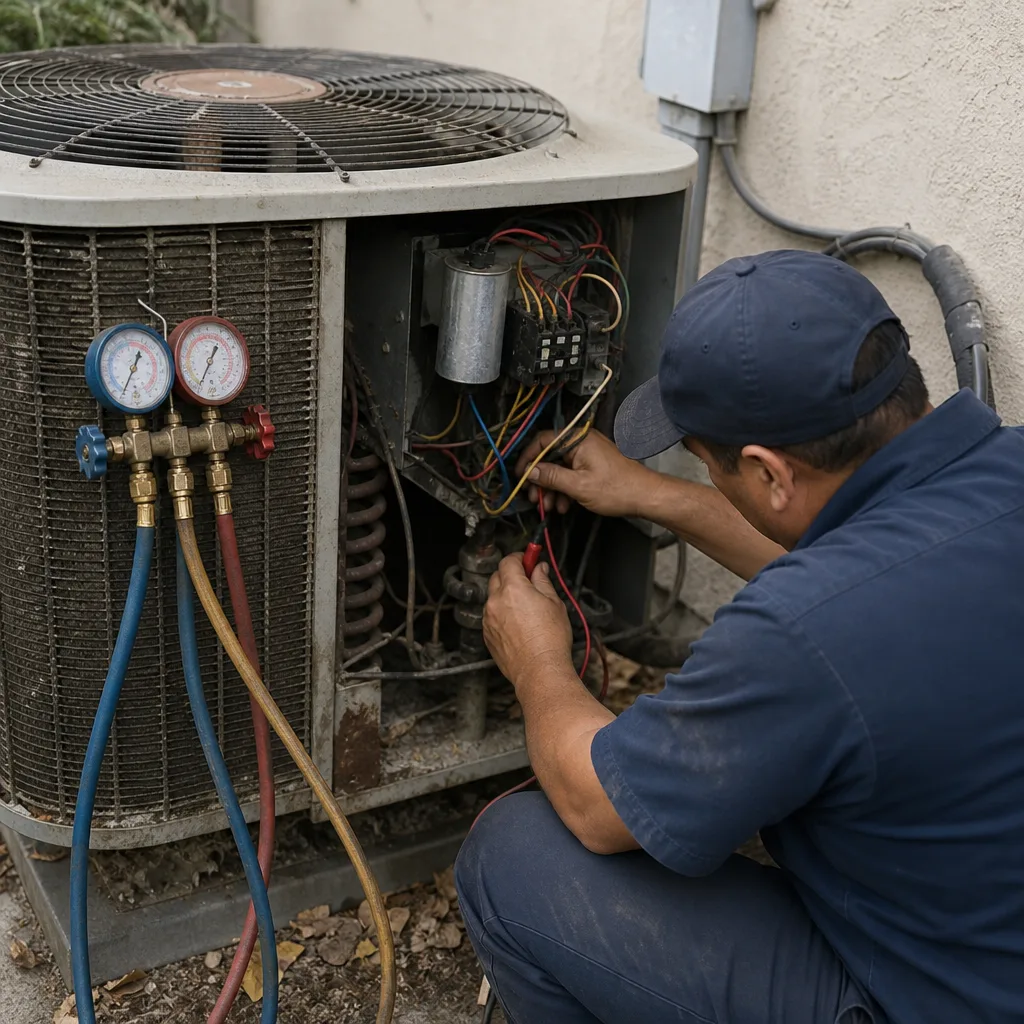
 After
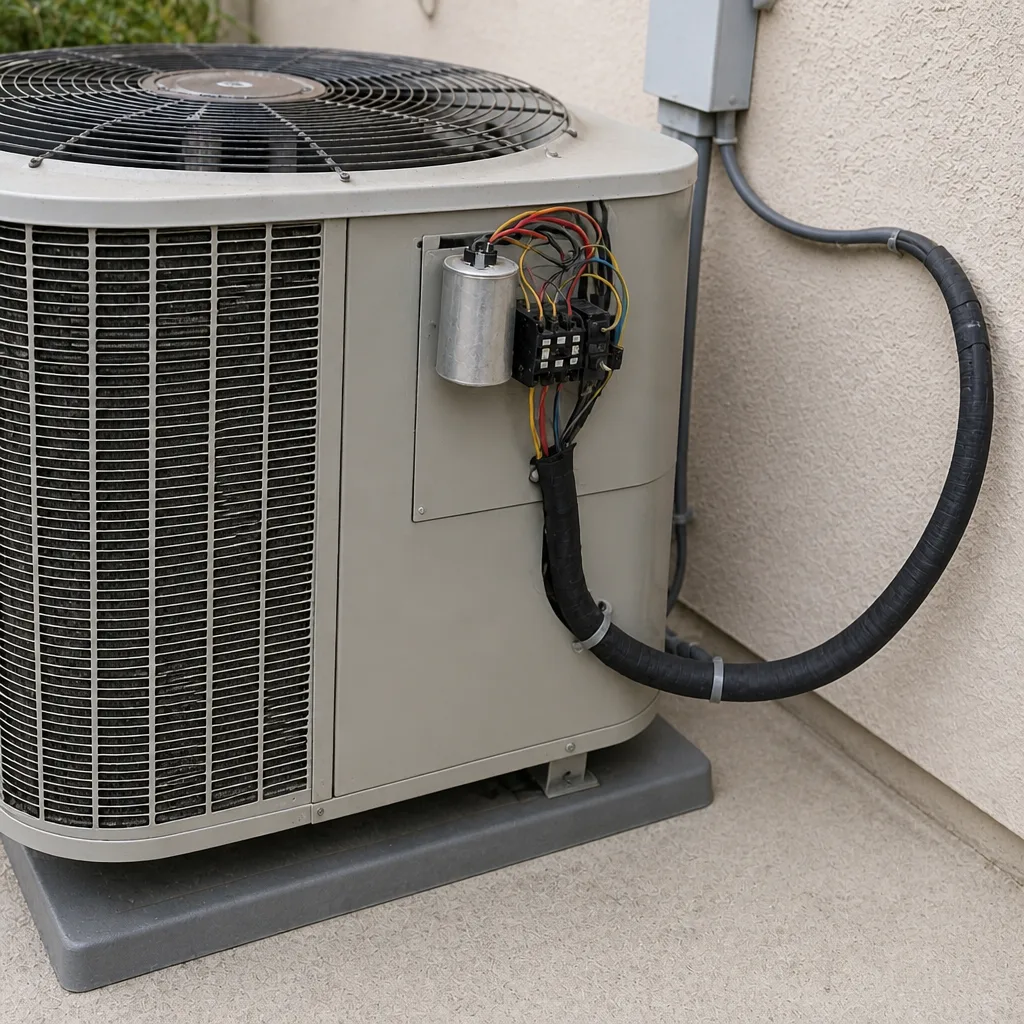
 Before
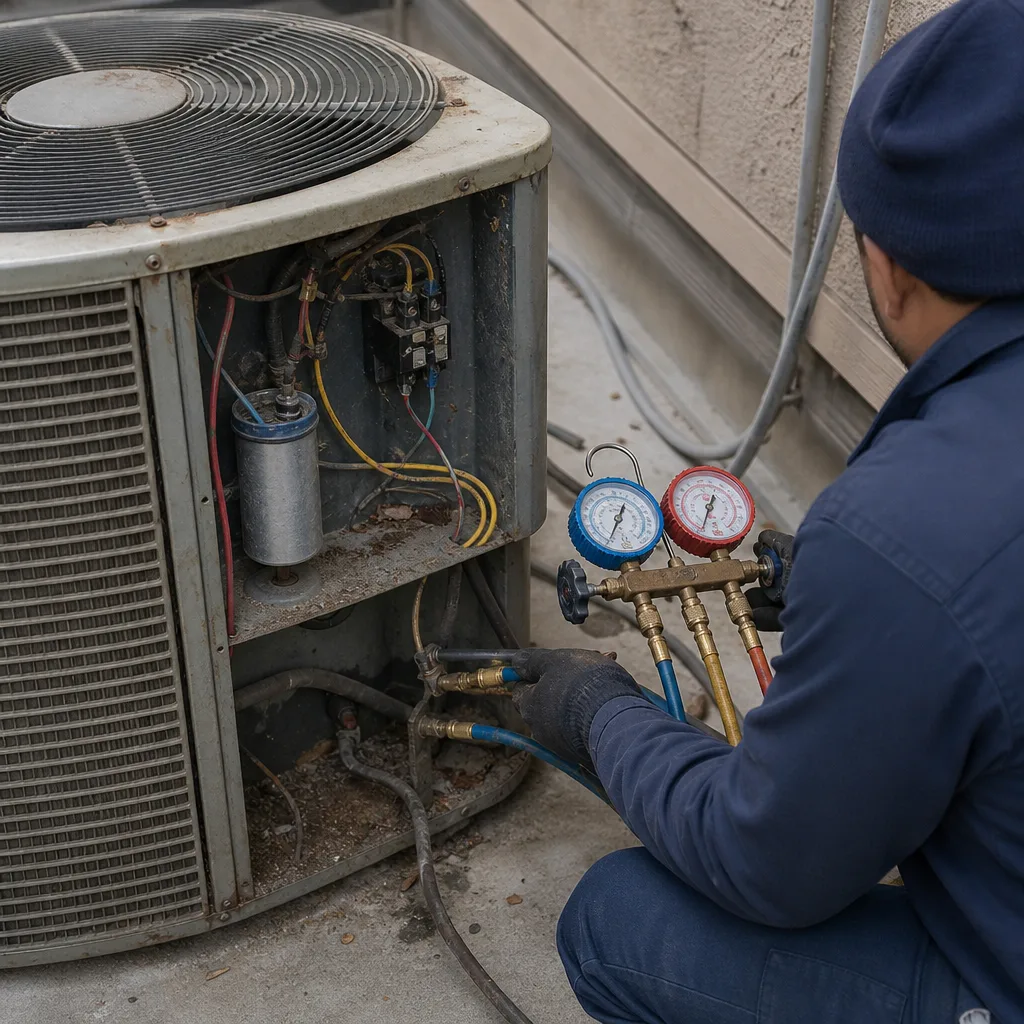
 After
 Before
 After
When to Call a Professional
Some problems can be handled with a filter change and a thermostat reset. Most can’t. Call us when you’ve tried the basics and the system still won’t cool, or when any of these are true: the air from your vents is warm, the outdoor unit hums but the fan won’t spin, you see ice on the indoor coil or refrigerant line, water is pooling near the air handler, or you hear grinding or clunking on startup. Any of those symptoms means refrigerant or electrical work is involved, and that’s not a job for a homeowner with a screwdriver. Refrigerant handling and electrical panel work carry real safety risk – a trained HVAC technician has the gauges, the meters, and the training for both.
AC Repair Downey offers free estimates in Downey – call (855) 677-0314. We answer 24/7, and fast dispatch from 7am to 7pm, Sunday through Friday, means most repair calls get same-day service. If you’re weighing repair versus replacement, that’s part of the conversation, not a separate sales pitch.
Frequently Asked Questions
AC repair in Downey runs from a minor part swap to a full compressor diagnosis, and the price depends entirely on what’s actually failed – which is why an accurate range should come after a real diagnostic, not before. Estimates are free, and the written estimate you receive sets the final price. Call (855) 677-0314 for an exact quote, and we’ll tell you what we find before any work begins.
Yes, in most cases – fast dispatch from 7am to 7pm, Sunday through Friday, means same-day repair is realistic for a system that’s stopped cooling. We answer 24/7, so even a call outside dispatch hours gets booked into the next opening. Call (855) 677-0314 first thing and we’ll get you on the schedule.
The most common causes in Downey homes are a failed capacitor, low refrigerant from a leak, a frozen evaporator coil, or a dirty filter choking airflow. Check the filter and look for ice at the indoor unit first, then call us. Warm air from every vent usually means the outdoor unit has stopped working entirely – turn the system off so the compressor isn’t damaged while you call (855) 677-0314.
Every brand has its own parts, control boards, and known weak points, so a technician familiar with your specific equipment usually diagnoses it faster and replaces the right part the first time. We’re certified to service Carrier, Trane, Lennox, Goodman, Rheem, York, Daikin, Bryant, and American Standard – so if your home runs one of those, we’re ready. Call (855) 677-0314 and tell us what brand you have.
Repair usually makes sense when the system is under 10-15 years old and the repair is a modest fraction of replacement cost. Replacement math starts to pencil out when the equipment is older, has had multiple major repairs, and the repair cost approaches a significant chunk of a new system. There’s no universal formula – we’ll give you a straight recommendation based on your actual equipment. Call (855) 677-0314 for a free estimate on either path.
Because refrigerant doesn’t get used up, a system that keeps needing recharges has a leak that hasn’t been found. Adding refrigerant without locating and fixing the leak is a short-term fix that costs you every season until you address the cause. Ask any technician to search for the leak before recharging – and if you’re in Downey and want a leak search done right, call (855) 677-0314.
The Bottom Line
AC repair in Downey comes down to knowing your system, reading its signals, and not being sold a Band-Aid. Downey’s inland-influenced heat and humidity push specific components harder than generic advice accounts for: capacitors degrade faster, coils freeze more often, and drain lines clog sooner. Your SCE bill is a diagnostic tool – watch it for the spike that means something is failing. If refrigerant is low, demand a leak search, not a top-off. And when it comes to repair versus replacement, get an honest read on your actual equipment rather than a formula. We work on the system you have, whether that’s a Carrier, a Trane, a Lennox, or a Goodman. One call covers your AC and your furnace, and a free estimate sets the price in writing.
If your system is failing or you just want a straight diagnosis, call (855) 677-0314. We answer 24/7. Fast dispatch from 7am to 7pm, Sunday through Friday. Free estimates, and a technician who knows your brand.
Written by the team at AC Repair Downey.